Collaborative development · Authentication & testing
Poké-Hub
A Pokémon model and dataset repository where I implemented two-factor authentication and account-recovery mechanisms.
My contribution
I implemented the two-factor authentication flow, from its screens and encrypted authentication secret to recovery codes and tests.

- End-to-end 2FA
- Two teams of 6
Extending an existing application
Poké-Hub builds on UVLHub and adapts its catalogue to Pokémon models and datasets, following reuse and open-science principles. Two teams of six worked in a shared repository.
Within my team, I took responsibility for two-factor authentication: adding protection while keeping setup, login and recovery understandable.
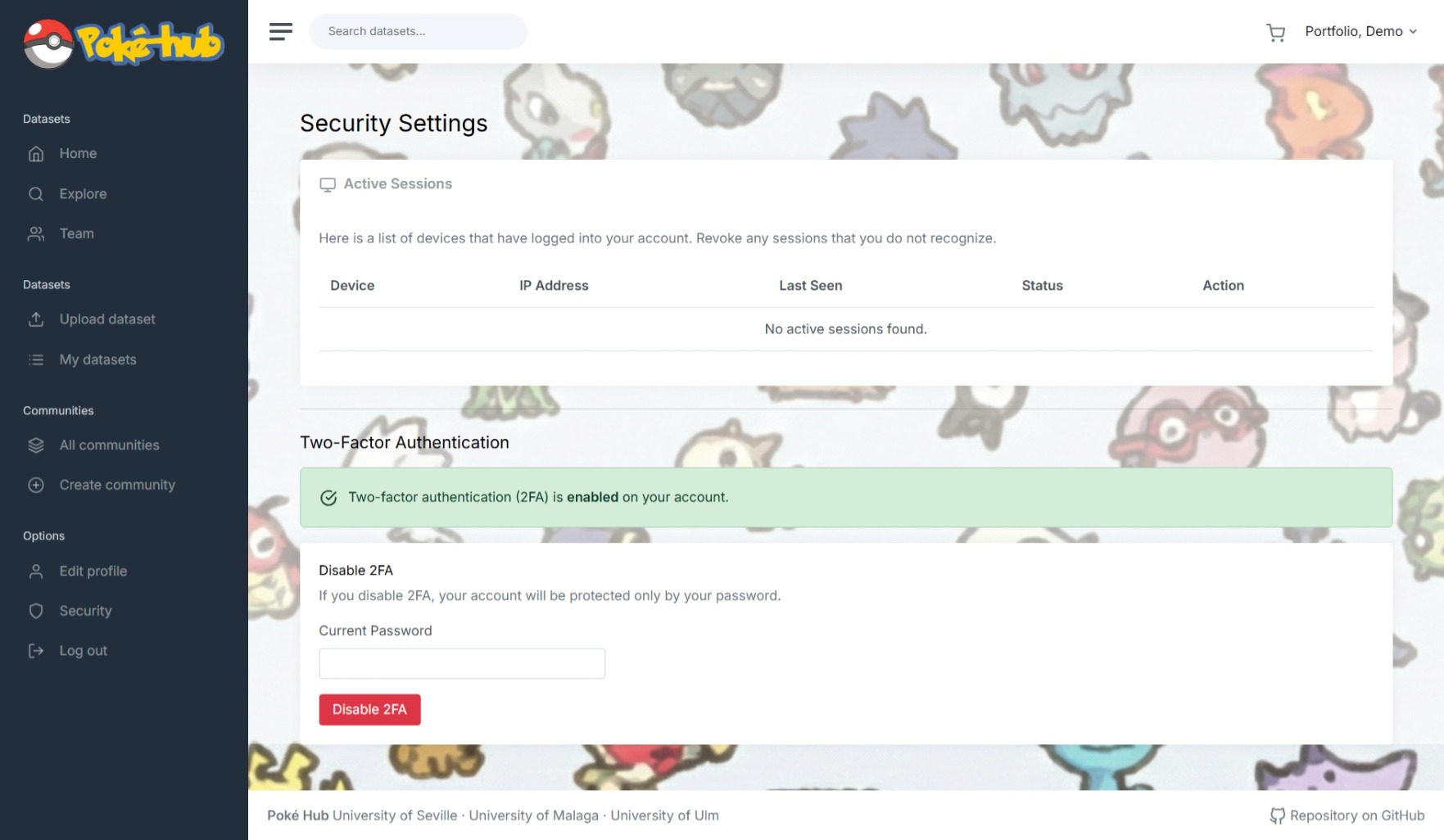
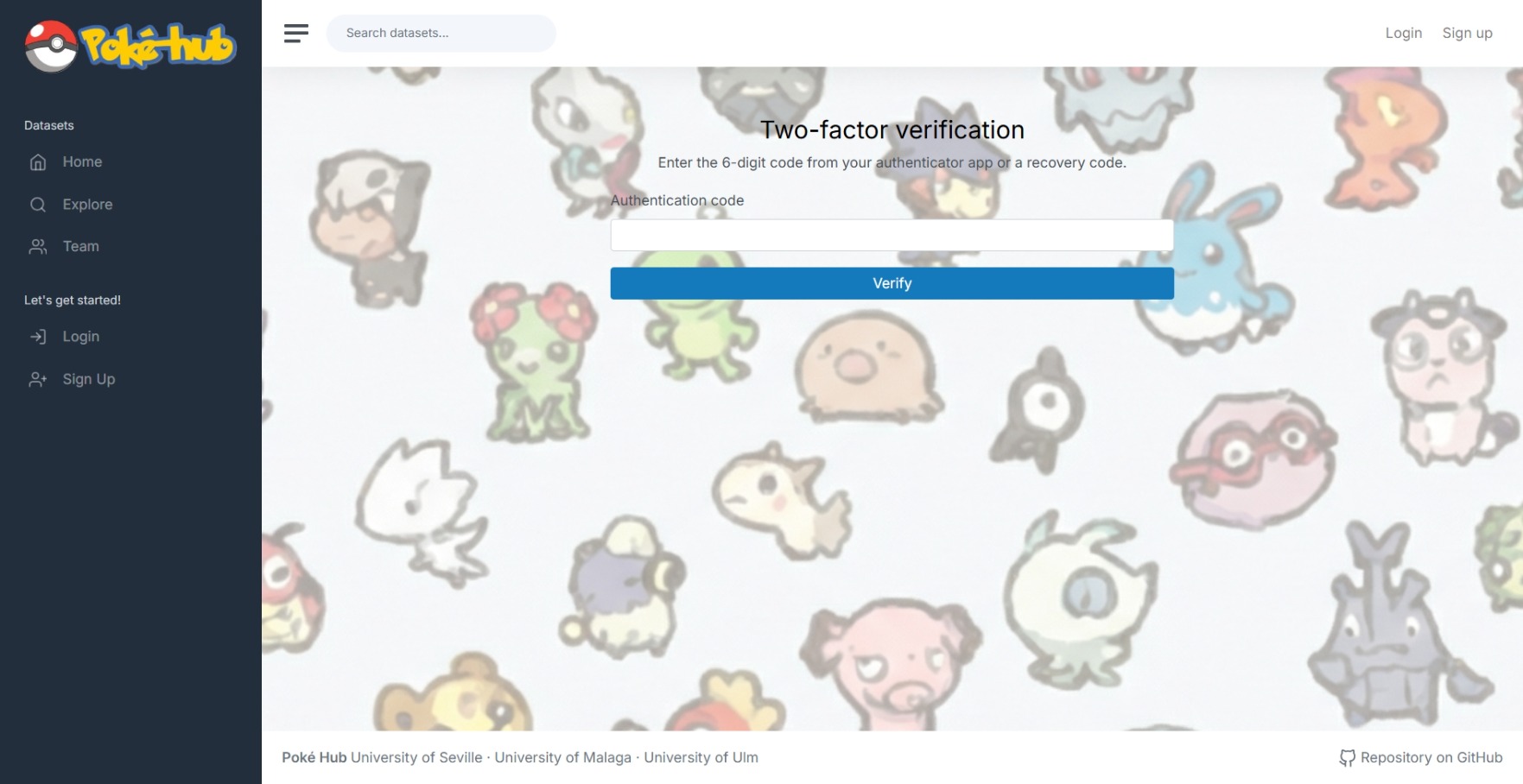
From setup to sign-in
- TOTP setup using a QR code or manual secret entry, confirmed with a six-digit code.
- Fernet encryption of the authentication secret before storage.
- Additional sign-in verification and password-protected deactivation.
- Jinja screens for setup, verification and account recovery.
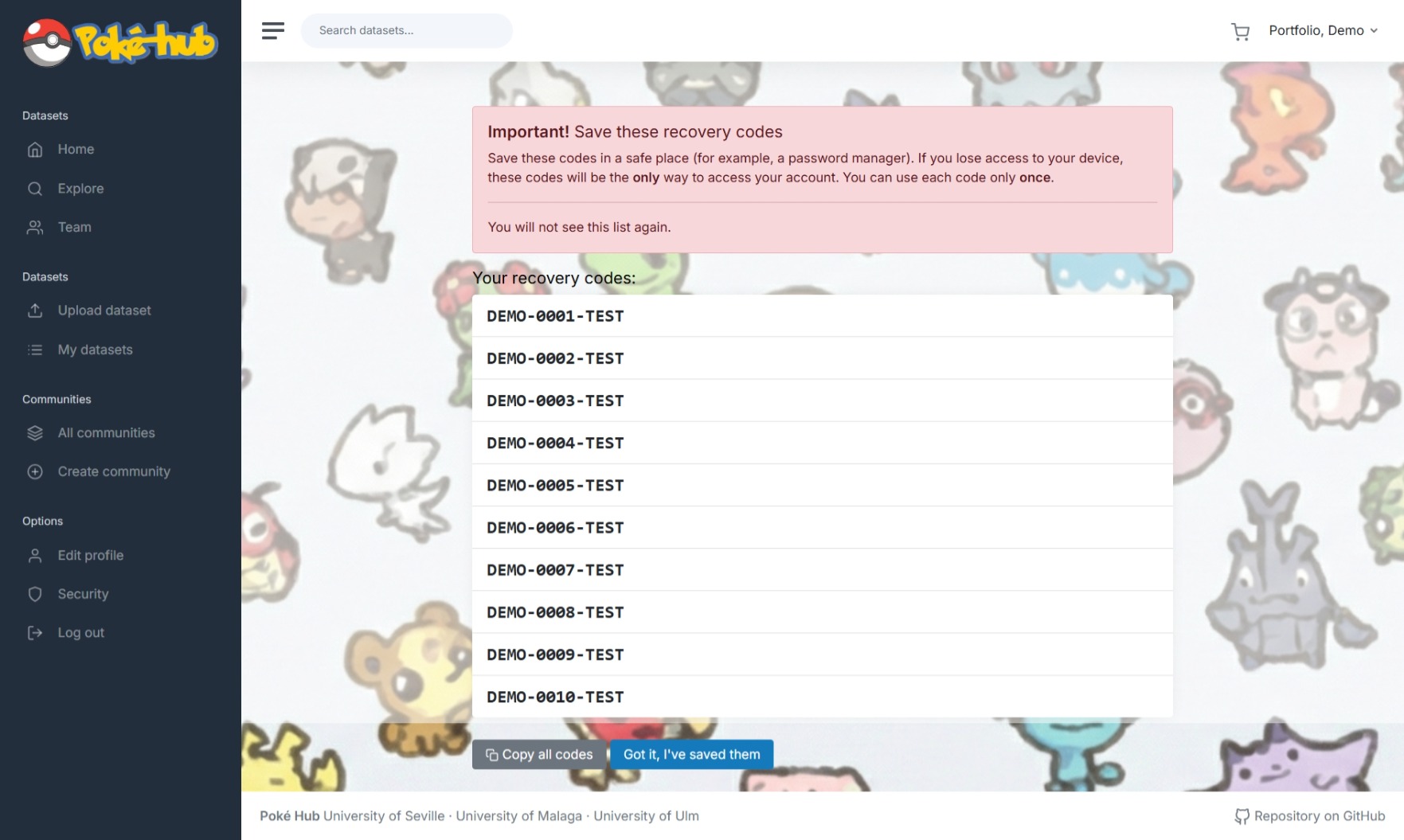
Recovery and testing
I implemented single-use recovery codes, stored as hashes and consumed when used, to allow access if the authentication device is lost.
I added unit, integration and Selenium browser tests, alongside a Locust load scenario and changes to the continuous-integration environment.
Source code and documentation available.